
Blogs and Resources
At the beginning of every season, you'll discover a new resource or blog on the website – created to help you understand yourself and others better so that you can navigate life's challenges and continue to grow. If my work resonates with you, click HERE to receive an update from me four times a year.
Looking for a specific topic?
Type your keyword into the search bar to filter through my resources on this site.
Free Guided Meditations and Exercises
Download and listen to a range of free meditations I've recorded to help you in a variety of situations – whether you need to stop for a minute, or be more compassionate towards yourself.
Free Downloads



In my recent conversation with Catherine Robson about anger and the creative mind, we explored many components of anger: where it comes from, unexpected ways that it can manifest itself, the way it distorts perception and covers up 'fault lines' from our past and much more.
We also discussed lots of practical ways to deal with inappropriate expressions of anger – and it's this part of our conversation that I'd like to share with you!


There are many reasons why we may find it hard to reach a personal goal or to get a new project off the ground. One thing is for sure – labelling yourself with a derogatory term isn’t going to solve this problem.
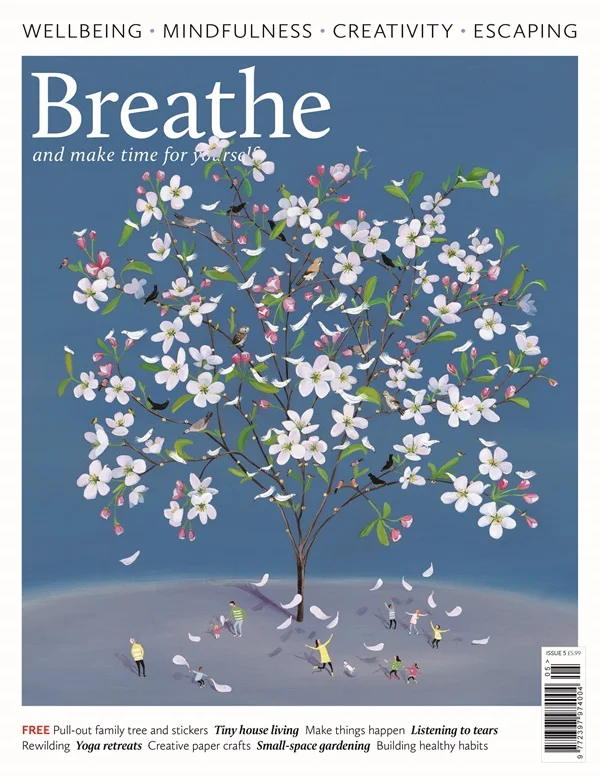


Learn how to keep your anxiety in check with this guide – PLUS download your free printable poster with a helpful acronym to help you (even when you're busy or on the move).

When a parent becomes present for her child in a whole-hearted way, the child’s whole autonomic nervous system can calm down. The resulting openness will enable him to stay connected and think creatively about any of the challenges he faces. He’ll experience what it’s like to be the master of his own ship.

When we regularly break out of our habitual, unconscious patterns, we begin to feel more alive and indeed more connected. Here are some thoughts on how to move out of feeling stuck – and reconnect with the joy of living PLUS a worksheet for you to set your intentions for your summer!

Sleep matters. The quality and amount of sleep we get affects our thinking, behaviour and health.
In this guide, I share ideas and practical steps that you can take to help you improve your sleep.

Anger has evolved as a defensive survival mechanism and when used appropriately it allows for a vital response. In our stressful modern world, inappropriate expressions of anger are becoming more and more frequent, however. When anger flares up uncontrollably or chronically, it indicates that our lives our out of balance and is a sign that we need to address the angry behaviour.

Are you troubled by your (chronic) anger or do you have a short fuse? Perhaps you feel your anger to be justified?
Either way, the angry person ultimately pays a heavy price in terms of health and relationships, and it’s never too late to tame the temper.

Do you struggle with paying attention when you need to, or get too absorbed by unwanted thoughts or activities?
I have seen in my practice that the quality of life is directly linked to the quality with which we pay attention. This guide will help you tune your focus and increase the quality of your attention.

Successful stress management is easier than you think but we often need reminders when we are in the midst of it.
This guide has been created to do just that – to remind you of things you can do to calm down, get your needs met and connect to others and yourself when you're feeling stressed.

Following on from the success of Calm the Chaos of the Creative Mind Audio CD, I am delighted to announce the launch of my free mini e-book ’22 Practical Tips to Calm the Chaos of the Creative Mind’.

Today, Thursday February 5th, is Time to Talk Day - an initiative led by Time to Change and other organisations, to encourage us to take just 5 minutes to talk about mental health. In this 5 minute interview, I discussed the state of creative people in the world today, why we need you and one small thing you can do this week to improve your own emotional health.

Creative minds are often buried under stress symptoms such as depression or anxiety. The talents are not recognised and people are confused about the contradictions. For instance, why can someone be in the zone, utterly absorbed one moment and yet distractible, forgetful and shambolic the next? Partners or parents lose patience, and creative minds themselves struggle through life tormented by feelings of guilt.
Listen to this extract from the CD, 'Calm the Chaos of the Creative Mind' to learn more.
Emotional Health
It is important for us to learn how to look after our emotional health...




In this blog, you’ll learn of dyslexics strengths and their styles of thinking as well as how to help a dyslexic child at home, whilst also nurturing their talents.


We are currently facing an epidemic of loneliness and isolation right across the western world. Loneliness hides in plain sight, as they say, and according to a report out by the New Economics Foundation in 2017, it comes at a cost of £32 billion per annum, in the UK alone. The situation is so dire that in the UK we have a minister for loneliness, and social isolation is an official ‘health priority’. Never have we been more connected, and yet never have we felt more lonely.
In my recent conversation with Catherine Robson about anger and the creative mind, we explored many components of anger: where it comes from, unexpected ways that it can manifest itself, the way it distorts perception and covers up 'fault lines' from our past and much more.
We also discussed lots of practical ways to deal with inappropriate expressions of anger – and it's this part of our conversation that I'd like to share with you!

Six in every 10 students say they experience levels of stress that interfere with everyday life (YouGov Survey, 2016) and there’s no reason to be embarrassed. But how do you recognise stress, and what can you do if it feels like it’s just too much?
Teen Breathe asked Renée van der Vloodt, who regularly helps young adults to manage life’s trials, and the first thing we learned – it’s good to talk.
Read and download the full article – as featured in Teen Breathe – for free.


Recently, I spent a day at a well-being conference organised by the London branch of the CIPD (Chartered Institute of Personnel and Development). It was packed. I knew things were bad in the workplace, but I had no idea quite how bad.
There are many reasons why we may find it hard to reach a personal goal or to get a new project off the ground. One thing is for sure – labelling yourself with a derogatory term isn’t going to solve this problem.
The Creative Mind
Learn how to overcome the difficulties that mask your great talents and be inspired!
In this blog, you’ll learn of dyslexics strengths and their styles of thinking as well as how to help a dyslexic child at home, whilst also nurturing their talents.
In my recent conversation with Catherine Robson about anger and the creative mind, we explored many components of anger: where it comes from, unexpected ways that it can manifest itself, the way it distorts perception and covers up 'fault lines' from our past and much more.
We also discussed lots of practical ways to deal with inappropriate expressions of anger – and it's this part of our conversation that I'd like to share with you!
There are many reasons why we may find it hard to reach a personal goal or to get a new project off the ground. One thing is for sure – labelling yourself with a derogatory term isn’t going to solve this problem.

Like Tennessee Williams, ‘I have always depended on the kindness of strangers.’
This is not to say that I haven’t been particularly blessed with a loving family and extraordinary friends, but it is that ‘uncalled for’ generosity and connection to me and my fate that has deepened my sense of belonging, by being made to feel that my life matters.

Subtle and subversive bullying tactics are rife in families, organisations and in society at large. How often have you come across the ‘polite’ cold shoulder or other blanking tactics, the perpetually sullen face or malicious gossip thinly disguised as concern? What about manipulation through ‘illness’, or other forms of sabotage?
Learn how to keep your anxiety in check with this guide – PLUS download your free printable poster with a helpful acronym to help you (even when you're busy or on the move).
When a parent becomes present for her child in a whole-hearted way, the child’s whole autonomic nervous system can calm down. The resulting openness will enable him to stay connected and think creatively about any of the challenges he faces. He’ll experience what it’s like to be the master of his own ship.

Do you ever feel tired and lack lustre without knowing what to do about it?
Have you stopped to ask yourself what might be sapping your energy and vitality?
We have busy lives, worrying about money, jobs, our families… If you dig a little deeper you’ll uncover one of the greatest and most hidden causes of fatigue: our inner critic.
![Why bother? Rekindle your sense of meaning and joy [ Audio Blog]](https://images.squarespace-cdn.com/content/v1/51853c4fe4b065e39b41dd04/1522746163734-TICQE110YIDAVPKUDZQO/iStock-487723573.jpg)
Do you sometimes feel disheartened or distressed? Feelings of gloom can descend upon us depending on what’s going on in our lives; sometimes things just seem to be conspiring against us! Or, perhaps you have a child with ‘why bother’ attitude…
Sleep matters. The quality and amount of sleep we get affects our thinking, behaviour and health.
In this guide, I share ideas and practical steps that you can take to help you improve your sleep.

Parents expect me focus on the dyslexia and not on their relationship with their child. How do I help a child to regulate his emotions when he lives in what is effectively a ‘toxic’ home environment?

Intuition is like radar that picks up signals and leads you to the right place at the right time. Children come into the world naturally connected to that inner voice which speaks to us without words. Read this post to discover how to help your children stay connected to this important guide...

We all have an inner compass, our very own guide, always on the look-out and engaged in the process of helping us stay alive and lead a life worthy of who we are and what we have to bring to the world. Could there be a better moment than right now, as a new year lies invitingly ahead, to be reminded of that particular strength and to make a conscious effort to reconnect with your own inner voice?

Dyslexic people do not think in words. They do not filter their experience of life through language, but rather through images and feelings in the first place. This holistic process is not steered or predetermined by the linear or sequential constraints of language.
Noticing more than others or seeing things differently than others makes dyslexics unusual, unexpected, off-the-wall at times and always creative.
Successful stress management is easier than you think but we often need reminders when we are in the midst of it.
This guide has been created to do just that – to remind you of things you can do to calm down, get your needs met and connect to others and yourself when you're feeling stressed.

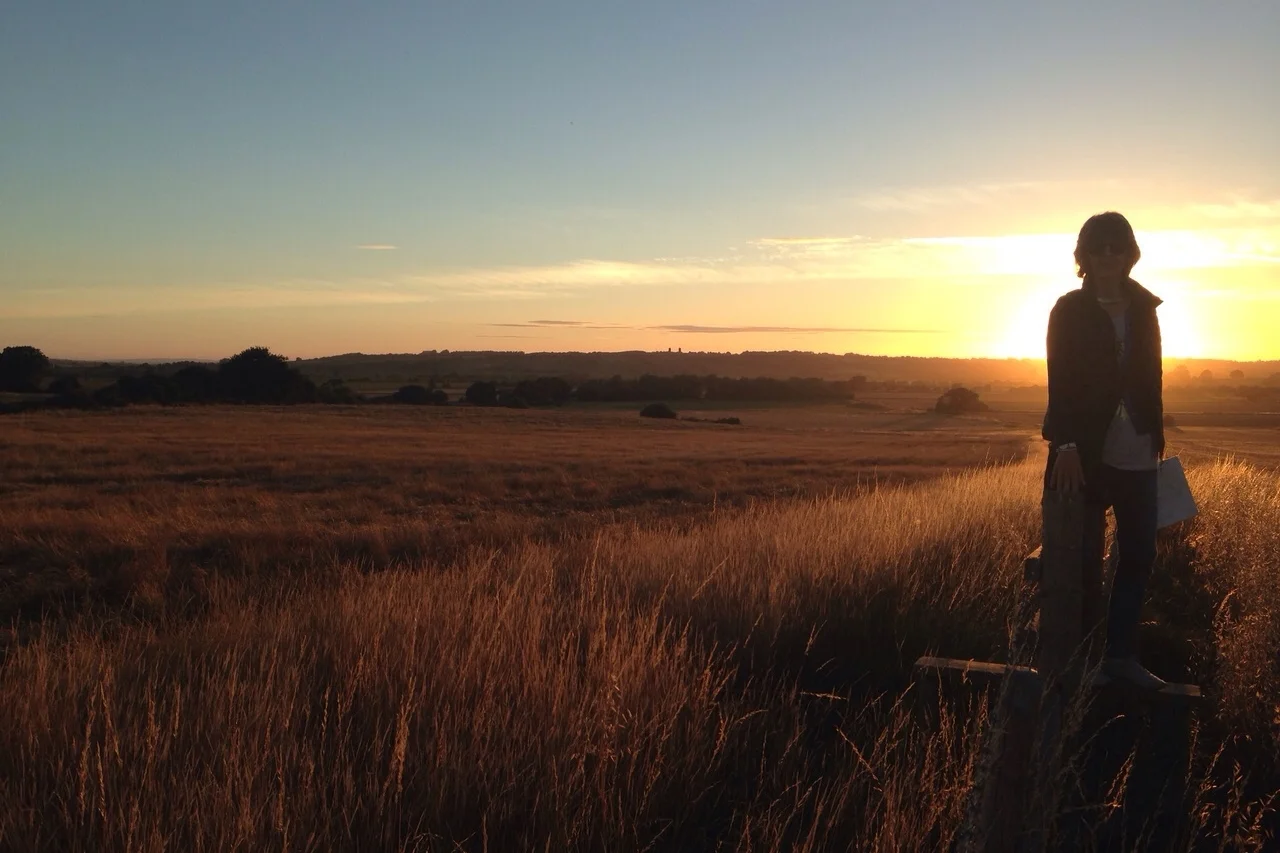
So many of us end up feeling that we are just skimming across the surface of things and rarely rejoice in a sense of engagement with what we are doing or a sense of accomplishment. Here is what you can do to focus the distracted mind...

Have you found yourself worrying about blushing in public, saying something odd or out of place to your colleagues, needing the loo too often, or perhaps not even being able to make it there in time? Social anxiety as a debilitating illness is on the increase - here's are some tips to deal with the symptoms...

What can we do to support our creative children to keep them in touch with their inner compass? What can we do to help them build resilience and minimise risks of stress, anxiety and depression? Read this blog to discover some helpful tips on how to support creative children...

Does creativity really make us more vulnerable to depression? I am no scientist but I am keen to offer my take, based on 20 years of experience, working with creative people.

A promising young actress friend was assessed recently, following the success of a play she was in at her prestigious drama school. All the praise aside, she was also admonished for not spending enough time alone. I was thrilled to hear this, for those are wise words indeed.
Parenting
Inspired by my work with children, these pieces are for parents who need some support.

In this blog, you’ll learn of dyslexics strengths and their styles of thinking as well as how to help a dyslexic child at home, whilst also nurturing their talents.
Six in every 10 students say they experience levels of stress that interfere with everyday life (YouGov Survey, 2016) and there’s no reason to be embarrassed. But how do you recognise stress, and what can you do if it feels like it’s just too much?
Teen Breathe asked Renée van der Vloodt, who regularly helps young adults to manage life’s trials, and the first thing we learned – it’s good to talk.
Read and download the full article – as featured in Teen Breathe – for free.
Like Tennessee Williams, ‘I have always depended on the kindness of strangers.’
This is not to say that I haven’t been particularly blessed with a loving family and extraordinary friends, but it is that ‘uncalled for’ generosity and connection to me and my fate that has deepened my sense of belonging, by being made to feel that my life matters.
Subtle and subversive bullying tactics are rife in families, organisations and in society at large. How often have you come across the ‘polite’ cold shoulder or other blanking tactics, the perpetually sullen face or malicious gossip thinly disguised as concern? What about manipulation through ‘illness’, or other forms of sabotage?
Learn how to keep your anxiety in check with this guide – PLUS download your free printable poster with a helpful acronym to help you (even when you're busy or on the move).
When a parent becomes present for her child in a whole-hearted way, the child’s whole autonomic nervous system can calm down. The resulting openness will enable him to stay connected and think creatively about any of the challenges he faces. He’ll experience what it’s like to be the master of his own ship.
Do you sometimes feel disheartened or distressed? Feelings of gloom can descend upon us depending on what’s going on in our lives; sometimes things just seem to be conspiring against us! Or, perhaps you have a child with ‘why bother’ attitude…
Parents expect me focus on the dyslexia and not on their relationship with their child. How do I help a child to regulate his emotions when he lives in what is effectively a ‘toxic’ home environment?
Anger has evolved as a defensive survival mechanism and when used appropriately it allows for a vital response. In our stressful modern world, inappropriate expressions of anger are becoming more and more frequent, however. When anger flares up uncontrollably or chronically, it indicates that our lives our out of balance and is a sign that we need to address the angry behaviour.

Society at large is getting more aggressive and there are many factors that contribute to the rise of angry behaviour. Children copy what they see others do. Anger is often a sign of frustration and overwhelm. It’s what happens when we are unaware of how far we’ve drifted off from our natural state of well-being.
Intuition is like radar that picks up signals and leads you to the right place at the right time. Children come into the world naturally connected to that inner voice which speaks to us without words. Read this post to discover how to help your children stay connected to this important guide...
We all have an inner compass, our very own guide, always on the look-out and engaged in the process of helping us stay alive and lead a life worthy of who we are and what we have to bring to the world. Could there be a better moment than right now, as a new year lies invitingly ahead, to be reminded of that particular strength and to make a conscious effort to reconnect with your own inner voice?
Dyslexic people do not think in words. They do not filter their experience of life through language, but rather through images and feelings in the first place. This holistic process is not steered or predetermined by the linear or sequential constraints of language.
Noticing more than others or seeing things differently than others makes dyslexics unusual, unexpected, off-the-wall at times and always creative.

Sooner or later it’s bound to happen. Your child’s imagination will hone in on the impermanence of life and the certainty that you - her parent - will die sometime. For some, this insight can become an obsession and before you know it you have a fearful child on your hands - clingy, unwilling to go to bed alone and unable to sleep.
Successful stress management is easier than you think but we often need reminders when we are in the midst of it.
This guide has been created to do just that – to remind you of things you can do to calm down, get your needs met and connect to others and yourself when you're feeling stressed.

You might think that a gifted child has it made - clever, intuitive, original. But for far too many such children their very talents make it difficult for them to fit in to the education system they find themselves in. If you're a parent of a gifted child, read on to see how you can help them get their needs met...
What can we do to support our creative children to keep them in touch with their inner compass? What can we do to help them build resilience and minimise risks of stress, anxiety and depression? Read this blog to discover some helpful tips on how to support creative children...
A promising young actress friend was assessed recently, following the success of a play she was in at her prestigious drama school. All the praise aside, she was also admonished for not spending enough time alone. I was thrilled to hear this, for those are wise words indeed.
Old habits die hard and some of them can keep us trapped. They affect our communication and connection to others, they hamper our ability to learn and grow, and they keep our horizon narrow.
Good psychotherapy helps break those shackles; it frees up physical and emotional energy and lifts us out of this confinement. Good therapy gives us the power to steer our own passage more accurately.
Here we look at behaviour patterns that stop people from developing and learning.
We all stumble somewhere on life’s journey or find ourselves going round in circles, rather than moving on.
Exhaustion, worry, negative rumination, poor sleep, sadness, irritability, loneliness - these are all signs that life is out of balance. It may be that you are wondering what it’s all about or ‘why bother?’ - that you feel undervalued or out of control of important things in your life.
Do you indulge in addictive behaviours, feel bored, or are you worried that ‘this is all there is’?
If this resonates with you, then this post is for you!

A client and HSP, documented her shifting sense of self. When I first asked her to tell me about her strengths and weaknesses she imploded right in front of my eyes. She captured the pain I saw and what it felt like to think about herself.
See how the model of herself transformed over the week we spent together...
Have you ever turned the radio on, determined to listen to the news or weather forecast, and next thing you know it’s over - and you didn’t take in a word. A nuisance maybe, but quite painless otherwise.
Creative people - think dyslexia, AD(H)D, autism - are known to struggle with the written language: reading and writing.
We are less aware of quite how sound sensitive they can be. This they have in common with HSP (Highly Sensitive People) and strongly affects how they process sound.

Recent research findings by leading experts in the field show that HPSs - or highly sensitive people - manifest more neurological brain activity when exposed to other people’s feelings, or pictures of emotions in others, than the average person.
About 20% of the population 'suffers' - and often quietly so - from these high levels of sensitivity. Growing up as an HSP can be difficult and confusing. Over-sensitivity and the fussing that can go with it, is seen as a flaw in western culture.
Find out more about Highly Sensitive People, tips and further reading in this post.

In my practice, I see children who struggle academically or emotionally. I am never surprised when they tell me that their sleep is bad too or that they wake tired in the morning. Bedtime itself can be a bone of contention between parent and child.
Working on ‘sleep hygiene’ with child and parent immediately makes other issues easier to deal with. We explore how things can be improved between them - how each has a responsibility - and in my practice, I teach the child or teenager what he can do immediately to improve the quality of his sleep. Giving them this responsibility can be very empowering and effective.
Here’s my sleep guide, which sums up what can be done.

Parents often tell me how stressful bedtime is. They talk about the difficulties they have getting their children to bed, about their children who have trouble falling asleep or about children whom they just can’t get up in the morning.
In spite of our best intentions, we can find ourselves muddling on for ages, trying to get sleep right for our children.
Let's start with the nuts and bolts - the different types of sleep our children need.

Millie’s Mum was devastated that her 12-year old daughter would throw a tantrum at the drop of a hat and terrorise the household. She had even started having her volcanic outbursts in public. Her Mum equated this relentless anger to a deep lack of gratitude and appreciation. By the time they came to me, Millie’s Mum was in a constant state of sadness.

It really isn’t easy to handle our children’s rage. Particularly if it recurs, hurts others and breaks things. Perhaps we never learned to deal with our own angry feelings in childhood and fell into the habit of pushing them away; leaving us to feel guilty in the aftermath.
As I often get asked the question: How can I support my angry child?
Each child and scenario is different but here are five tips that will help us to give our children a better opportunity to acknowledge and deal with their angry feelings constructively.
Press
Six in every 10 students say they experience levels of stress that interfere with everyday life (YouGov Survey, 2016) and there’s no reason to be embarrassed. But how do you recognise stress, and what can you do if it feels like it’s just too much?
Teen Breathe asked Renée van der Vloodt, who regularly helps young adults to manage life’s trials, and the first thing we learned – it’s good to talk.
Read and download the full article – as featured in Teen Breathe – for free.
Video Interviews
A selection of interviews with people who do fascinating work!
![Tools of the Trade: The Therapist’s Voice [VIDEO INTERVIEW]](https://images.squarespace-cdn.com/content/v1/51853c4fe4b065e39b41dd04/1395746542891-SLRXBNZ7GGE2FLJF6G22/derek-video.png)
Effective communication is at the heart of therapy. Our voice is the vehicle for our intention. Recently, I spoke to musician Professor Derek Barnes about how he teaches therapists and other healthcare professionals to play their vocal instrument to maximum effect. Watch the interview here to understand how you can learn to affect positive change in the other, by honouring and enhancing the uniqueness of our own voice.
![Become more Stress Aware [ VIDEO INTERVIEW ]](https://images.squarespace-cdn.com/content/v1/51853c4fe4b065e39b41dd04/1389949618037-NMZD9C8JUKK6HHDCCFGX/become-stress-aware.png)
Have you ever asked yourself how stress-resilient you are?
What are the things you do when the pressure rises? Do you nail bite, over-eat or –drink, become anxious or irritable? And do you spot the signs early enough to take action and avert the symptoms that herald more serious stuff ahead? We all need to stay informed about the many faces of stress-related symptoms.
Join me and hear what my Human Givens colleague, stress expert Emily Gajewski, has to say about self-harming and how to deal with it.

One in four homeless people is a former member of the armed services. Over 20,000 veterans are in jail or on probation.*
Post Traumatic Stress Disorder (PTSD) is very real - and something we cannot begin to imagine. We are unable to comprehend the trauma but we can support those who are suffering.
I went to visit Tom, who was in Northern Ireland and the first Gulf War, and he told me his story. In this short video, we hear of the outstanding transformation his life took once he sought the help of PTSD Resolution.
Modern parenting has a new set of challenges. As we spend time learning, practicing and reflecting as parents, we realise that the experience is both dynamic and full of choice.
I had the pleasure of interviewing Miriam Chachamu, well-regarded family therapist and author of the popular book "How to Calm a Challenging Child". In our video interview, Miriam gives us helpful parenting tips and advice as we discuss fairness, sibling rivalry, choice and teenagers.
![Healing Heroes with Suzie Jennings [VIDEO INTERVIEW]](https://images.squarespace-cdn.com/content/v1/51853c4fe4b065e39b41dd04/1378917045801-BWURD1RRVZ1U883HTM7T/suzie-jennings.png)
Suzie Jennings, founder of Heroes at Ease, the first yoga programme specifically for wounded military, explains how yoga helps war veterans in overcoming PTSD.
![The Value of Mindfulness with Sandra Tideman [VIDEO INTERVIEW]](https://images.squarespace-cdn.com/content/v1/51853c4fe4b065e39b41dd04/1374769475238-MP44XBKKX9OZN63ZIOLS/sandra-tideman.png)
Why has mindfulness become so popular?
Mindfulness practitioner and teacher Sandra Tideman-van Nispen explains in our video interview.
“Everyone who practices mindfulness regularly will find it brings a lot of benefits in life. It seems that particularly in the fast developing technological and modern digital world that we live in, we need it. Because nowadays most of the people most of the time actually train in mindlessness and restlessness!
![Achieve Wellness with Judy Malloy [VIDEO INTERVIEW]](https://images.squarespace-cdn.com/content/v1/51853c4fe4b065e39b41dd04/1374250952223-GIQD87AZLBWMXZKY8L6K/judy-malloy-smallimg.png)
To achieve lasting well-being we must acknowledge that the mind and body are one. The body gives us messages about the mind and vice versa. Join me in this interview with my good friend Judy Malloy where we talk about black boxes, how our body tells a story and why Descartes may not have had it right.
![Unsung Heroes with Tony Gauvain [VIDEO INTERVIEW]](https://images.squarespace-cdn.com/content/v1/51853c4fe4b065e39b41dd04/1374761610616-3LGG6FLYUXMJQIM38YY6/tony.png)
Listen to Colonel Tony Gauvain (retired) whose special work I’d like to celebrate and bring to your attention. Tony co-founded the charity PTSD Resolution www.ptsdresolution.org with Piers Bishop, to help veterans suffering from the aftereffects of their military experience.


